Are Expensive Bathroom Vanities Actually Worth the Price?
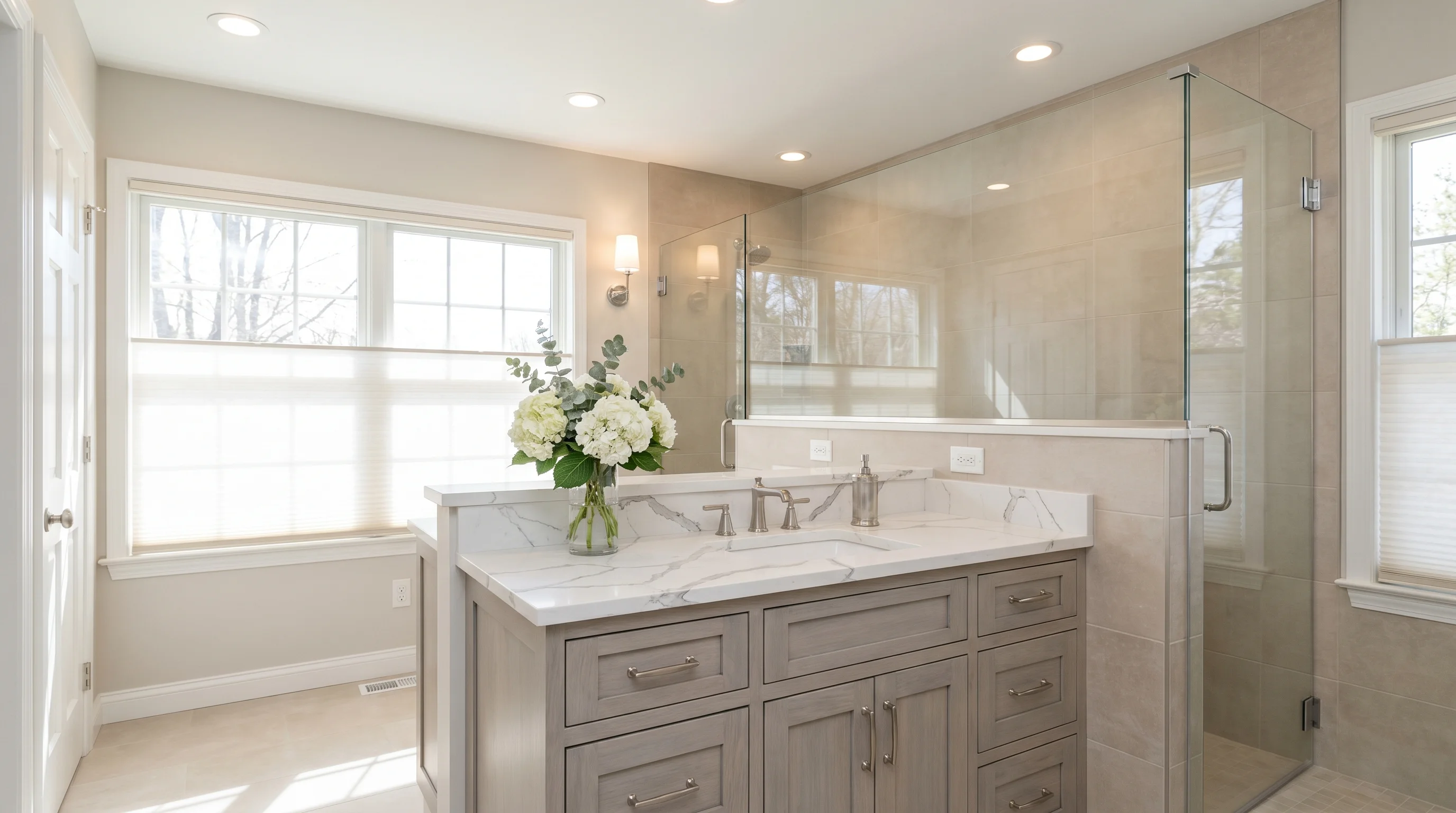
Here's a question worth asking before you spend $2,000 on a bathroom vanity: what exactly are you paying for? Because in a lot of cases, the premium price buys you a brand name, a showroom experience, and a margin that supports a retail location in an expensive part of town — not necessarily a better cabinet or a more durable countertop. That's not cynicism, it's just how retail pricing works. The good news is that once you understand what actually drives vanity quality, you can make a smarter call at any budget.
What You're Actually Paying For at the High End
Luxury vanity brands — think RH, Kohler's premium line, or high-end European imports — do offer some genuine advantages. Solid wood construction (not just solid wood veneer or HDF), hand-finished paint, and proprietary hardware with longer warranty coverage are real differentiators. If you're building a high-end custom home and the vanity is a focal point, that investment can make sense.
But here's where the math gets murky: a significant portion of that $2,000–$4,000 price tag goes toward distribution costs, showroom overhead, and brand positioning. The countertop in a $2,500 vanity isn't necessarily thicker or harder than the quartz countertop in a well-made mid-range set. The sink doesn't drain better. The soft-close hinges — if they're quality hinges — perform the same whether they're on a $600 cabinet or a $2,000 one.
The Hidden Cost of Buying Components Separately
One place where budget vanities genuinely lose ground isn't quality — it's completeness. A lot of lower-priced vanities are cabinet-only. You're looking at a $399 base price that becomes $900 once you source a countertop, a sink, a faucet, and hardware separately. And that's before you factor in the coordination headache of making sure everything fits and matches.
This is where complete-set vanities earn their value. A set that includes the quartz countertop, ceramic undermount sink, backsplash, and brushed nickel hardware — all matched and ready to install — eliminates that sourcing problem entirely. You know what you're getting, you know it fits together, and the price you see is the price you pay. Browse complete vanity sets at Modern Vanity to see what that looks like in practice, from $499 for a 24-inch up to $1,299 for a 60-inch double sink.
Where Mid-Range Vanities Have Quietly Caught Up
Cabinet construction is the honest answer here. Ten years ago, a $600 vanity meant particleboard that would swell and warp the first time water got under the sink. That's changed. HDF (High-Density Fiberboard) construction — when it's properly sealed and assembled — holds up well in bathroom humidity. It machines cleanly, takes paint evenly, and doesn't have the grain inconsistencies of lower-grade solid wood. The key qualifier is assembly quality, which is why Canadian-assembled cabinetry with consistent quality control matters more than the raw material spec alone.
Soft-close doors and drawers used to be a premium feature. Now they're standard on any vanity worth buying at any price point. If a vanity in 2025 doesn't have soft-close everything, that's a red flag regardless of price.
Countertop material is another area where the gap has narrowed. Engineered quartz — the same material used in high-end kitchens — is now available on mid-range vanities. It's non-porous, doesn't need sealing, and resists staining better than most natural stones. A quartz countertop on a $799 vanity performs the same as one on a $2,000 vanity. The stone doesn't know what cabinet it's sitting on.
Where Expensive Vanities Still Win
Be fair here: there are things money genuinely buys in the vanity market.
- Finish depth and texture. High-end painted finishes have more coats, better prep, and a tactile quality that's hard to replicate at lower price points. If you're touching the cabinet every day, you'll notice.
- Custom sizing. If your bathroom has a non-standard alcove — say, 38 inches wide — you're not finding that in a standard lineup. Custom cabinetry earns its premium in those situations.
- Exotic materials. Walnut, white oak, or hand-hammered copper sinks are genuinely premium materials that cost more to source and work with. If that's the aesthetic you're after, the price is justified.
- Longer warranties. Some premium brands back their product with 5–10 year warranties. That has real value if something goes wrong.
For a standard bathroom renovation — powder room, main bath, or ensuite — most homeowners don't need any of those things. They need a vanity that looks good, holds up to daily use, and doesn't require a separate countertop order.
How to Decide What's Right for Your Bathroom
Start with your actual constraints: the rough-in plumbing location, the wall-to-wall measurement, and whether you need a single or double sink. A 30-inch vanity is the most common size for a main bathroom — see 30-inch options here — but a 48-inch or 60-inch double sink configuration changes the math entirely for a shared ensuite.
Once you know the size, ask what you're actually getting for the price. A complete set at $699–$899 that includes quartz, sink, hardware, and backsplash is a different value proposition than a cabinet-only unit at the same price. Do the full component math before comparing.
Finally, consider finish colour relative to your tile and floor. Modern Vanity carries three finishes — White, Grey, and Blue — which covers most contemporary bathroom palettes without overcomplicating the decision. If you're unsure which works with your existing tile, send a photo to (647) 428-1111 on WhatsApp and someone can give you a straight answer.
The honest conclusion: expensive vanities aren't a scam, but they're not automatically better either. At the mid-range complete-set price point, you can get quartz countertops, quality construction, and a finished look without paying for showroom overhead or brand margin. Shop the full lineup online and judge the specs yourself — that's a more reliable method than price alone.