How to Clean a Quartz Vanity Countertop (Without Wrecking It)
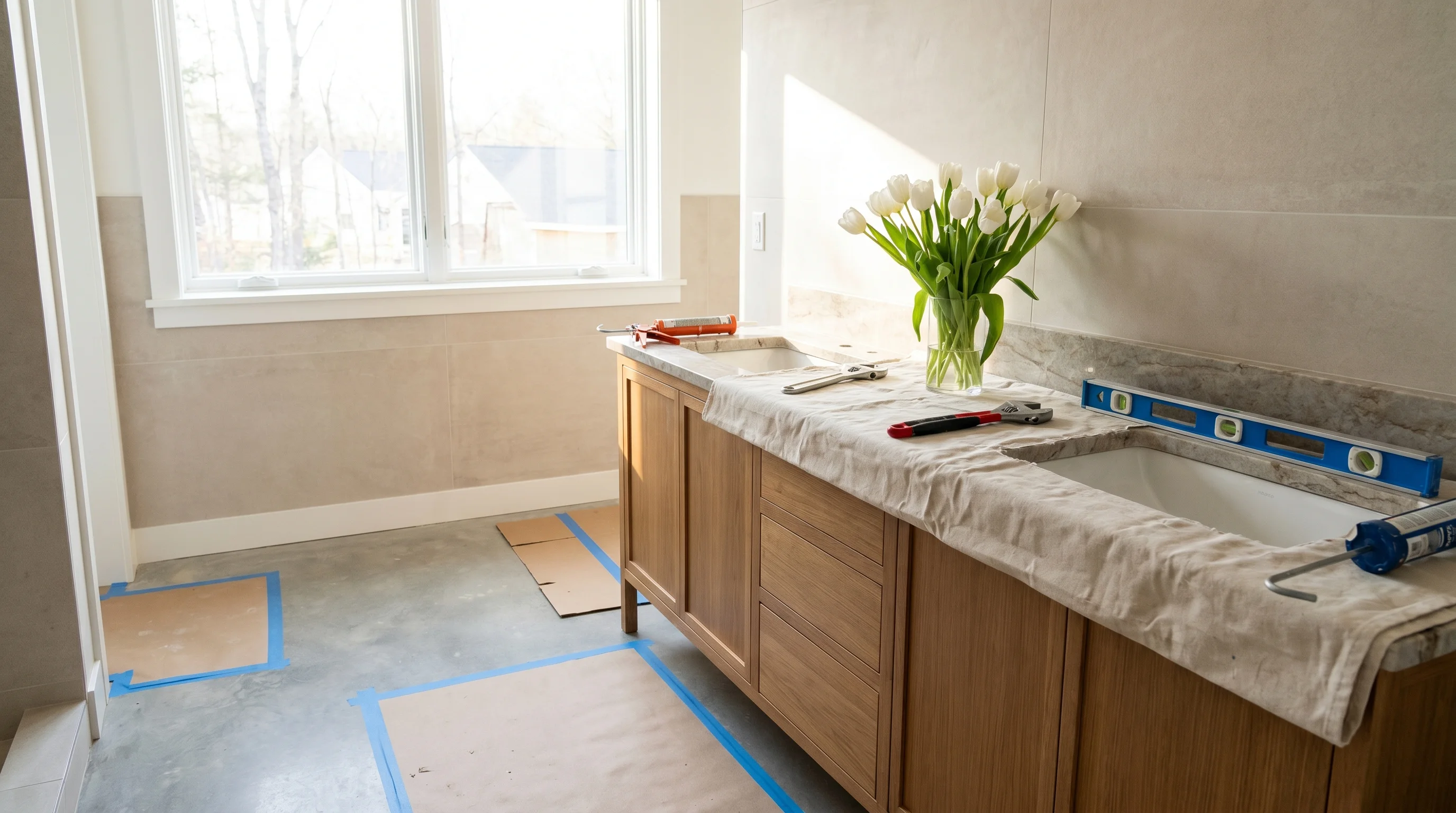
Most people over-clean their quartz countertops with the wrong products, then under-clean them in the spots that actually matter. Quartz is non-porous and engineered to resist stains — but that doesn't mean it's indestructible. Bleach, abrasive scrubbers, and even some 'natural' cleaners like undiluted vinegar can break down the resin binders that hold the surface together over time. The good news: maintaining quartz properly takes less than five minutes a week.
Daily Cleaning: What Actually Works
For everyday maintenance, you need exactly two things: warm water and a few drops of mild dish soap. Wipe the surface with a soft microfibre cloth, rinse with a damp cloth, and dry it off. That's it. The drying step matters more than most people realize — hard water in the GTA is high in calcium and magnesium, and letting water pool and evaporate on quartz leaves mineral deposits that build up over weeks into a hazy film.
If you're wiping down the vanity after brushing teeth or washing your face, a quick pass with a damp microfibre cloth (no soap needed) is enough. The goal is to prevent residue from sitting on the surface, not to deep-clean every morning.
Weekly Cleaning: Removing Toothpaste, Soap Scum, and Hard Water Deposits
Once a week, give the countertop a more thorough wipe. For toothpaste or dried soap residue, apply a small amount of dish soap directly to the spot, let it sit for 30 seconds, then scrub gently with a non-scratch sponge. Avoid anything labelled 'heavy duty' or 'scrubbing' — those pads will micro-scratch the surface finish.
For hard water spots and mineral buildup, mix equal parts water and isopropyl rubbing alcohol (70% concentration works well) in a spray bottle. Spray, let it sit for a minute, then wipe clean. This is safe for quartz and effective on calcium deposits without the acidity risk that comes with vinegar-based cleaners.
A product like Method Daily Granite & Stone Cleaner or Weiman Quartz Countertop Cleaner is worth keeping under the sink. Both are pH-neutral, quartz-safe, and available at most Canadian grocery and hardware stores. Spray, wipe, done.
What Not to Use on Quartz — Ever
This list is short but important:
- Bleach or bleach-based cleaners — breaks down the resin over time, can cause discolouration
- Undiluted vinegar or lemon juice — the acidity etches the surface with repeated use
- Abrasive scrubbing pads (steel wool, Scotch-Brite green side) — creates fine scratches that trap grime
- Oven cleaners or paint removers — obviously, but worth saying
- Nail polish remover (acetone) — will damage the finish immediately
If you've accidentally spilled nail polish or a harsh chemical, rinse the area immediately with water and dish soap. The faster you act, the less damage occurs.
Prevention: The Habits That Keep Quartz Looking New
Cleaning less often is possible when you prevent the buildup in the first place. A few habits that make a real difference:
- Dry the sink rim after use. The junction between the undermount ceramic sink and the quartz countertop is where hard water deposits accumulate fastest. A quick wipe after washing hands takes two seconds and prevents the weekly scrubbing session.
- Keep products off the surface when not in use. Hairspray, perfume, and some skincare products contain alcohol, dyes, or oils that can stain or dull quartz if left sitting. Store them in a cabinet or on a tray.
- Use a soft-close vanity. This sounds unrelated, but slamming cabinet doors vibrates the countertop repeatedly over years. Every vanity in the Modern Vanity lineup comes with soft-close hinges and drawer slides — it's a small thing that adds up.
What Makes Quartz Low-Maintenance Compared to Other Countertop Materials
Marble and natural granite require periodic sealing — typically once a year — to prevent staining. Skip the sealing and a glass of mouthwash can leave a permanent mark. Quartz requires no sealing, ever. It's engineered with resins that make it non-porous from the start.
Laminate countertops are easy to clean but can swell or delaminate if water gets into seams near the sink. Solid surface materials like Corian are durable but can scratch more easily than quartz and require occasional buffing to maintain appearance.
Quartz sits in a practical middle ground: harder than laminate, lower maintenance than natural stone, and more forgiving than solid surface in a wet bathroom environment. The quartz countertops included with every Modern Vanity set — from the 30" single-sink units up to the 60" double-sink configurations — are finished with a consistent surface that holds up to daily bathroom use without special care routines.
One Thing Most Guides Skip: The Backsplash
If your vanity includes a quartz or tiled backsplash, clean it with the same products as the countertop. The grout lines (if any) are a different story — those do benefit from a grout sealer applied once a year and a stiff-bristle toothbrush for weekly scrubbing. The backsplash tiles included in Modern Vanity sets are ceramic, so they're easy to wipe down with any pH-neutral cleaner.
If you have questions about caring for your specific vanity setup, message us on WhatsApp at (647) 428-1111 — we're happy to give you product-specific advice.
Browse the full lineup at modernvanity.ca/vanities or check the FAQ for more details on materials and delivery. Complete sets — cabinet, quartz countertop, ceramic undermount sink, backsplash, and brushed nickel hardware — start at $499 for the 24" and go up to $1,299 for the 60" double-sink. Free warehouse pickup in the GTA, or delivery to your garage or inside your home.