How to Prevent Mould Around Your Bathroom Vanity
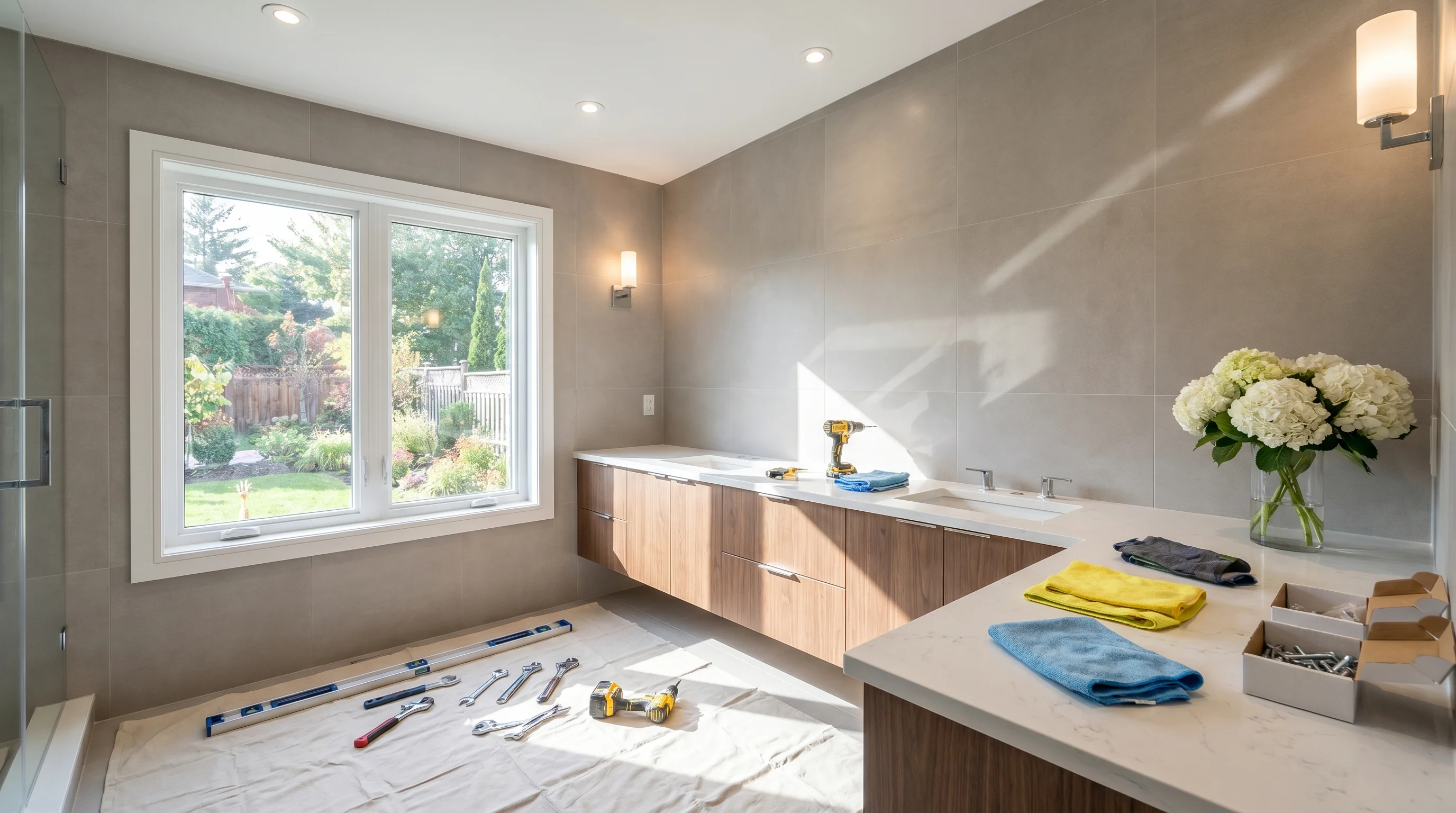
Mould around a bathroom vanity is almost never a cleaning failure. It's a ventilation and material problem that cleaning alone can't fix. The grout line behind your faucet, the silicone bead where the countertop meets the wall, the underside of the cabinet base — these are the spots that stay damp long after you've wiped everything down. Once mould takes hold in those areas, a spray bottle of bleach isn't going to solve it.
Why Vanity Areas Are a Mould Hotspot
Your bathroom vanity sits at the intersection of three mould-friendly conditions: consistent moisture, limited airflow, and porous materials. Every time someone runs the tap or takes a shower, humidity spikes. That moisture settles on surfaces and works its way into any gap it can find — the caulk line at the backsplash, the joint where the countertop meets the cabinet, the floor beneath the toe kick.
Older vanities made from MDF or particleboard absorb that moisture directly. Once the cabinet substrate swells, the finish cracks, and mould has a permanent foothold inside the structure itself. At that point, no amount of surface cleaning matters.
HDF (High-Density Fiberboard) is meaningfully more resistant. It's denser and less porous than standard MDF, which slows moisture absorption significantly — but it's not waterproof. The finish, the seams, and the installation quality still matter. A well-sealed HDF cabinet in a poorly ventilated bathroom will still develop problems over time. Material is one part of the equation.
The Spots You're Probably Missing When You Clean
Most people wipe down the countertop and call it done. These are the areas that actually need attention:
- The caulk line at the backsplash: This is the single most common mould location. Water pools here constantly. Silicone caulk lasts 3–5 years before it starts breaking down and allowing moisture behind the backsplash. Inspect it yearly and re-caulk when it shows any cracking or discolouration.
- Under the sink basin: Ceramic undermount sinks create a small ledge where the sink meets the countertop. Water collects there. Wipe it dry after use, especially around the faucet base.
- The cabinet base and toe kick: Splash water and floor moisture accumulate here. If your vanity sits directly on tile without a proper seal, moisture wicks up into the cabinet base over time.
- Inside the cabinet under the P-trap: Even a slow drip from pipe connections creates a constantly damp environment inside the cabinet. Check every few months.
- The wall behind the vanity: If your vanity sits close to the wall and airflow is blocked, the drywall behind it stays damp. This is especially common with 30" vanities installed in tight powder rooms with no exhaust fan.
A Realistic Cleaning Routine That Actually Prevents Mould
Prevention is about frequency and the right products — not intensity. You don't need to scrub hard. You need to clean consistently and dry thoroughly.
Daily (30 seconds): Wipe the countertop and around the faucet base with a dry cloth after the last use of the night. Quartz countertops are non-porous, so water doesn't absorb — but it still sits in the joint between the countertop and backsplash if you don't move it.
Weekly: Clean the countertop with a pH-neutral cleaner. Avoid anything with bleach or ammonia on quartz — it won't cause immediate damage but degrades the resin binder over time. Products like Method Daily Granite + Stone Cleaner or a simple mix of dish soap and warm water work well. Wipe down the cabinet faces and the area around the drain. Check under the sink for any moisture.
Monthly: Apply a thin layer of silicone-based countertop sealant to the quartz surface — not because quartz needs sealing (it doesn't, the way natural stone does), but because it creates a hydrophobic barrier at the joint lines. Inspect the caulk at the backsplash. Clean the drain stopper and the drain surround, where soap scum and moisture combine into an ideal mould environment.
Annually: Re-caulk any silicone lines that show cracking or have turned yellow. This is the single highest-impact maintenance task for mould prevention. A tube of GE Advanced Silicone in white or clear runs under $15 at any hardware store.
Ventilation Is Doing More Work Than Your Cleaning Products
No cleaning routine compensates for a bathroom that stays humid for hours after use. If your exhaust fan isn't pulling air effectively — or if there isn't one — surface mould is almost inevitable regardless of how often you clean.
The standard recommendation is to run the exhaust fan for 20–30 minutes after a shower. In practice, most people don't. A humidity-sensing fan (Panasonic WhisperSense is the most commonly recommended residential option) solves this automatically — it runs until humidity drops to a set threshold, then shuts off. For a bathroom with a vanity that's already showing early mould signs, this is usually a more effective fix than any cleaning product.
If your bathroom has no exterior window and a weak exhaust fan, consider leaving the vanity cabinet doors open after showering. It sounds minor, but it allows airflow to reach the cabinet interior and the wall behind it.
Why Material Choice Matters Before Mould Is Ever a Problem
If you're replacing a vanity that's already showing mould damage, the material of the replacement matters. HDF cabinet construction with a sealed finish, a quartz countertop, and a ceramic undermount sink removes three of the most mould-prone surfaces from the equation. Quartz doesn't harbour bacteria or absorb moisture. Ceramic is inert. The HDF cabinet, properly sealed at installation, resists the slow moisture absorption that destroys MDF-based cabinets.
That combination — HDF cabinet, quartz countertop, ceramic sink — is standard across the full Modern Vanity lineup, from the 24" single-sink sets starting at $499 up to the 60" double-sink configurations at $1,299. It's not a premium feature. It's how the sets are built.
If you're comparing options and want to understand what's actually included in each set before ordering, the FAQ page covers materials, delivery, and installation details. Or message us directly on WhatsApp at (647) 428-1111 — it's the fastest way to get a straight answer on sizing or availability.
Mould prevention starts with the right materials and a consistent routine. Both are easier to get right than most renovation guides suggest.