How to Protect Your HDF Vanity from Bathroom Humidity
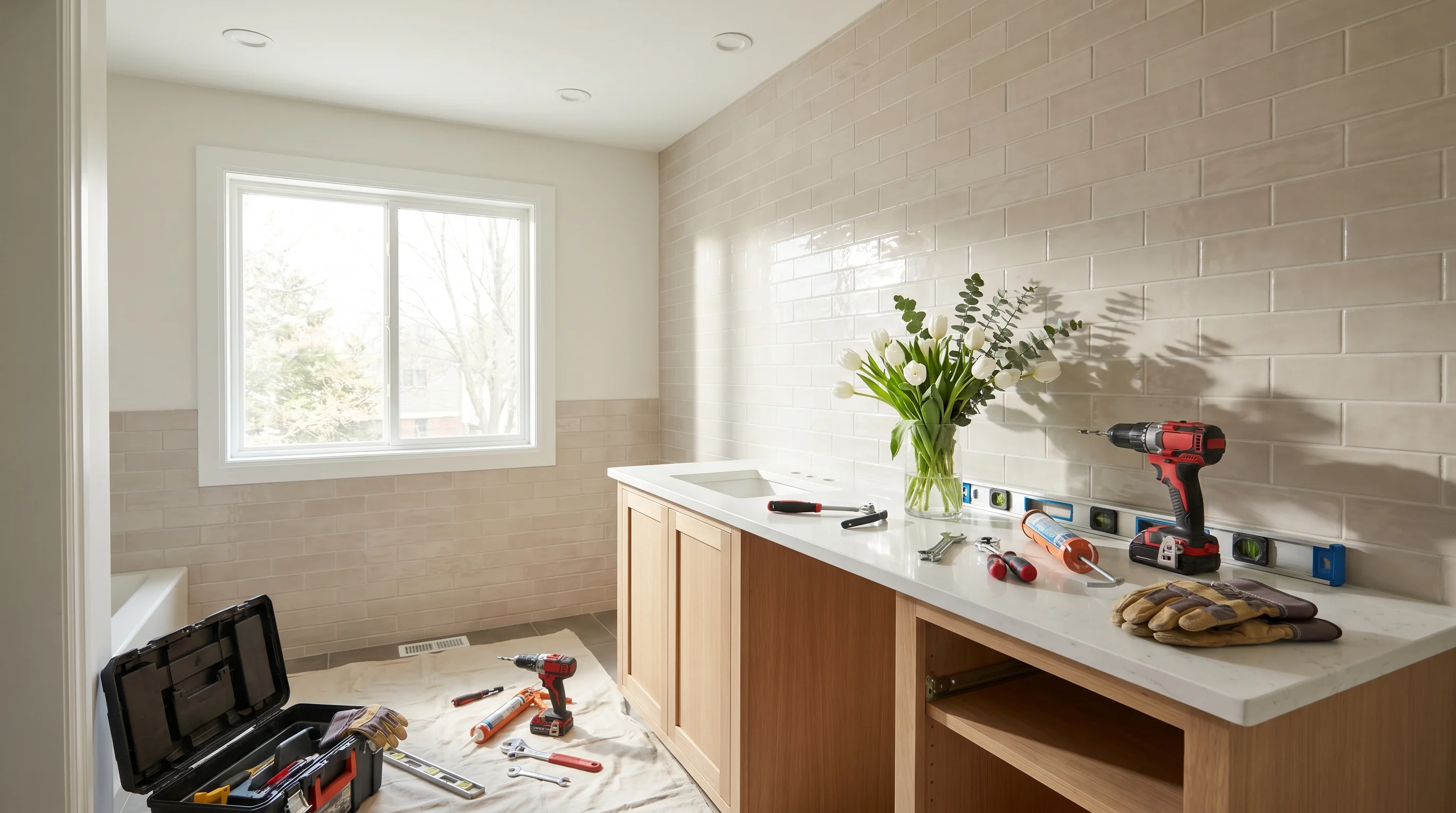
Most vanity damage doesn't happen from flooding or obvious leaks. It happens from the slow, daily accumulation of steam, splashed water near the base, and condensation pooling behind the sink — the kind of moisture that's easy to ignore until the cabinet starts to swell or the finish bubbles. If your bathroom doesn't have great airflow, this matters even more.
Why HDF Handles Humidity Better Than Standard MDF — But Still Has Limits
HDF (High-Density Fiberboard) is compressed at a significantly higher density than regular MDF, which means it absorbs moisture more slowly and holds its shape better under humidity fluctuations. That's why it's the preferred cabinet material for bathroom vanities that need to hold up in a damp environment without warping over time.
That said, HDF is still a wood-composite product. Prolonged direct water contact — especially at the base, around the toe kick, or near unsealed edges — can cause damage over time. The cabinet finish and the quality of installation seals are your first line of defence, not the board itself.
Our vanities use HDF cabinets assembled in Canada with a factory-applied finish, which gives you a solid starting point. But good habits extend that protection considerably.
The One Maintenance Task Most People Skip: Checking the Caulk Line
The caulk seal between your countertop and the wall — and between the countertop and the cabinet — is the most important moisture barrier in your entire vanity setup. It's also the one that gets ignored until it's cracked, pulling away, or growing mildew.
Inspect the caulk lines every six months. Look for:
- Gaps or separation from the wall or countertop edge
- Discolouration (grey or black streaks indicate mildew behind the seal)
- Crumbling or dried-out texture
If you see any of these, remove the old caulk completely with a utility knife and a caulk remover tool, clean the surface with rubbing alcohol, and apply a fresh bead of 100% silicone caulk — not acrylic, not latex. Silicone stays flexible and doesn't absorb water. GE Advanced Silicone or DAP Kwik Seal Ultra are both widely available at Canadian hardware stores and hold up well in humid environments.
Cleaning the Cabinet Surface: What to Use and What to Avoid
For the cabinet exterior (the painted HDF panels), a weekly wipe-down with a damp microfibre cloth is all you need for routine maintenance. For deeper cleaning, a diluted solution of dish soap and warm water works well — apply it with a cloth, not a sponge, and dry the surface immediately after. Never leave standing water on the cabinet face or sides.
Avoid these products on HDF cabinet surfaces:
- Bleach-based sprays — they break down the finish over time
- Abrasive scrubbers — they scratch the surface and make it more porous
- Ammonia-based cleaners (including many glass cleaners) — they dull the finish
For the quartz countertop, maintenance is even simpler. Quartz is non-porous, so it doesn't harbour bacteria or absorb moisture. A spray of mild all-purpose cleaner (Method or Seventh Generation work well) and a wipe-down is sufficient for daily use. For soap scum buildup, a paste of baking soda and water applied with a soft cloth cleans effectively without scratching. Avoid anything with bleach or high acidity — it can dull the resin binders in the quartz over time.
The ceramic undermount sink included with our vanities is similarly low-maintenance — just avoid abrasive pads that can scratch the glaze.
Ventilation: The Cheapest Protection You Can Add
No cleaning routine compensates for a bathroom that stays humid for hours after every shower. If your exhaust fan isn't running during and for at least 15–20 minutes after every shower, moisture is settling on every surface in the room — including the top of the vanity, the cabinet sides, and the floor around the base.
A few practical habits that make a real difference:
- Run the exhaust fan during the full shower and leave it on for 20 minutes after
- Leave the bathroom door slightly open after showering if you don't have a window
- In winter, when indoor heating dries the air, humidity swings are less of a concern — but condensation near cold exterior walls can still be an issue
- If your exhaust fan is older than 10 years or sounds like it's working hard, it's probably not moving enough air — CFM ratings drop significantly as fans age
For GTA bathrooms specifically: older homes in Toronto, Mississauga, and surrounding areas often have undersized or poorly ducted exhaust fans. If you're renovating and replacing your vanity, it's worth checking the fan at the same time.
Base and Toe Kick: The Area Most Likely to Take Water Damage
The bottom of the vanity cabinet — the toe kick and the base panel — is the most vulnerable area for moisture damage. Splashes from the sink, wet hands reaching for under-sink storage, and floor cleaning all introduce water at this level repeatedly over time.
Keep the area around the base dry as part of your regular floor cleaning routine. If you're installing a new vanity, make sure the floor is completely level before setting the cabinet — an unlevel install can cause water to pool toward one side of the base rather than draining away.
If you notice the finish on the toe kick starting to lift or bubble, address it quickly. Light sanding and a touch-up with a matching furniture touch-up marker (available at Home Depot or Lee Valley) can stop minor damage from progressing. If the board itself is swelling, that section will need to be replaced — which is why catching it early matters.
Ready to Upgrade?
If you're replacing an older vanity that's already showing humidity damage, our complete HDF vanity sets start at $499 for a 24-inch and go up to $1,299 for a 60-inch double sink — each one includes the quartz countertop, ceramic undermount sink, backsplash, and brushed nickel hardware. Available in White, Grey, and Blue.
Browse the full selection at Shop All Vanities, or if you're working with a specific wall width, check out our 30" vanities as a popular starting point for most GTA bathrooms. Have questions about sizing or delivery? Message us on WhatsApp at (647) 428-1111 — we're happy to help you figure out what fits before you order.
More renovation guidance is available in our blog archive.