Ontario Bathroom Renovation Permits: What You Actually Need
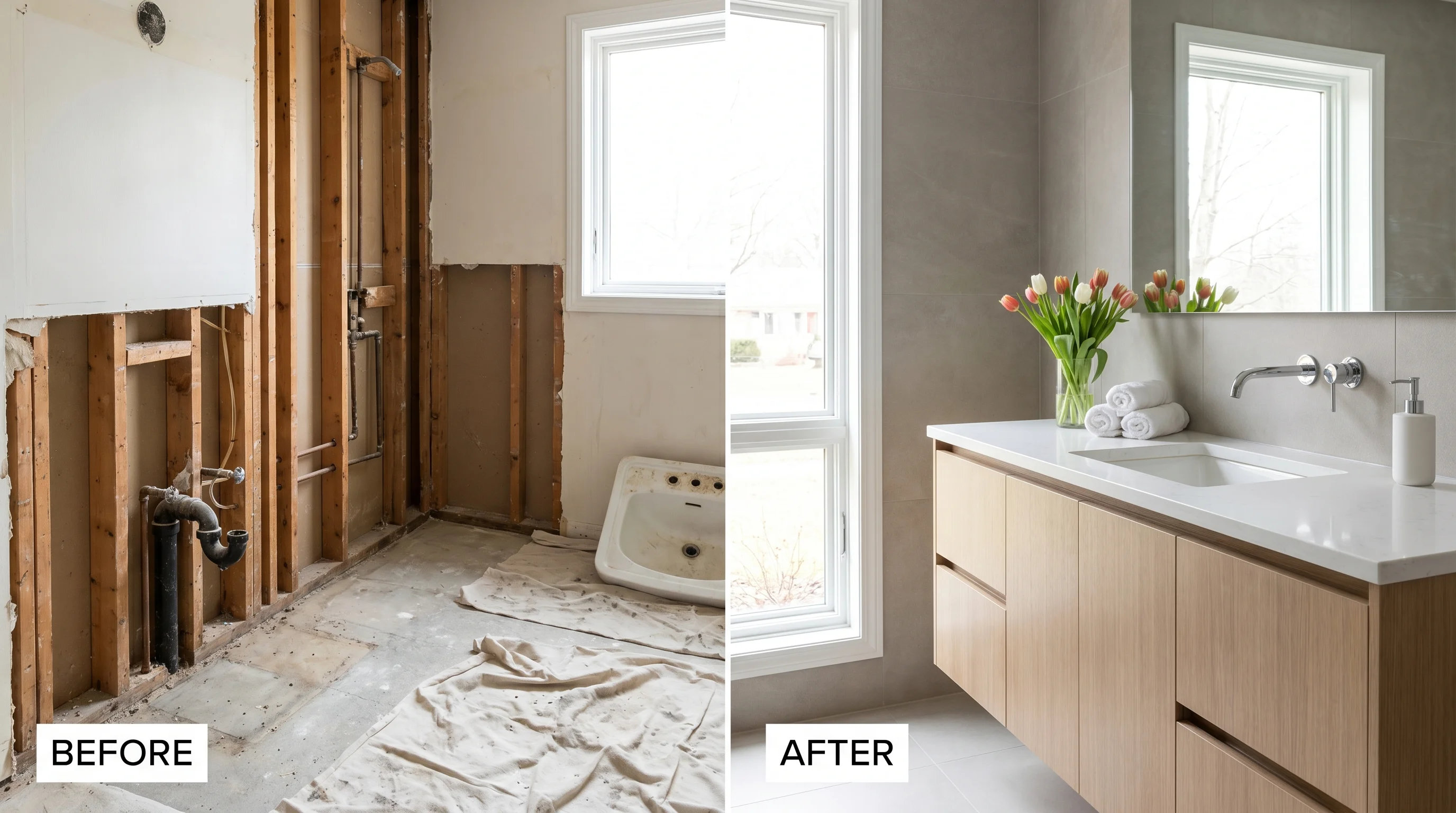
Here's a question most contractors won't ask you upfront: does your bathroom renovation need a permit? In Ontario, the answer depends less on the size of your project and more on what you're actually changing. Swapping a vanity? No permit. Moving a load-bearing wall to expand the bathroom? Absolutely one. Getting this wrong doesn't just cost you a fine — it can void your home insurance coverage and complicate a future sale.
What Triggers a Permit in an Ontario Bathroom Renovation
Ontario's Building Code draws a clear line between cosmetic upgrades and structural or mechanical changes. The following work generally does not require a permit:
- Replacing a vanity, toilet, or faucet in the same location
- Retiling floors or walls
- Swapping a light fixture on an existing circuit
- Installing a new mirror or medicine cabinet (non-structural)
- Painting
The following work typically does require a permit:
- Moving or adding plumbing drain lines
- Relocating electrical panels or adding new circuits
- Removing or altering walls (load-bearing or not, in most municipalities)
- Adding a bathroom where none existed
- Installing a new exhaust fan that requires new ductwork through an exterior wall
The threshold varies slightly by municipality. Toronto, Mississauga, and Brampton each have their own building departments, but all operate under the Ontario Building Code as a baseline. When in doubt, a quick call to your local municipal building department costs nothing and can save you thousands.
Realistic Timelines for Permitted vs. Non-Permitted Work
A full permitted bathroom renovation in the GTA — one that involves plumbing relocation, electrical upgrades, and structural changes — realistically takes 8 to 16 weeks from permit application to final inspection. Here's why:
- Permit application and approval: 2 to 6 weeks depending on the municipality and backlog. Toronto's building portal has improved, but complex applications still take time.
- Rough-in inspections: After framing, plumbing rough-in, and electrical rough-in are complete, an inspector must sign off before walls close. Scheduling that inspection adds 3 to 10 business days in most GTA cities.
- Final inspection: Once everything is finished, another inspection closes the permit. Budget another 1 to 2 weeks.
A cosmetic renovation — new vanity, new tile, new fixtures in existing locations — can realistically be done in 1 to 3 weeks, depending on trades availability and how long materials take to arrive. No permit, no inspection scheduling, no waiting.
This timeline difference matters when you're planning around a home sale, a family event, or simply your own patience.
Where the Money Actually Goes in a GTA Bathroom Reno
Budgets for bathroom renovations in Ontario vary wildly, but here's a realistic breakdown for a standard 50 to 80 sq ft main bathroom in the GTA:
- Cosmetic refresh (no permit): $3,000 to $8,000 — new vanity, tile, fixtures, paint, accessories
- Mid-range renovation (may require permit): $10,000 to $20,000 — new layout, full retile, upgraded plumbing fixtures, new exhaust
- Full gut renovation (permit required): $20,000 to $45,000+ — structural changes, heated floors, custom tile work, high-end fixtures
Labour is the dominant cost in the middle and upper tiers. A licensed plumber in the GTA charges $90 to $150/hour. An electrician runs $85 to $130/hour. Tile setters typically quote by the square foot — expect $8 to $18/sq ft for labour alone, more for complex patterns or large-format tile.
The permit itself is relatively affordable. A typical residential bathroom permit in Toronto or Mississauga runs $200 to $600 depending on the scope of work. It's not the permit that breaks budgets — it's the inspection-driven discoveries. Opening walls often reveals outdated plumbing or knob-and-tube wiring that must be addressed before the inspector signs off.
The Vanity Is the Highest-Impact Change You Can Make Without a Permit
If you're working with a fixed budget and want the most visible improvement without triggering permits or extended timelines, the vanity is the right place to spend. It's the largest piece of furniture in most bathrooms, it anchors the entire visual composition, and it determines how functional the space actually feels day to day.
A dated oak vanity with a cultured marble top from 2003 makes a bathroom look older than almost anything else. Replacing it with a modern cabinet, quartz countertop, and undermount ceramic sink changes the entire character of the room — no permits, no inspections, no contractor required if you're reasonably handy.
At Modern Vanity, complete sets — HDF cabinet, quartz countertop, ceramic undermount sink, backsplash, and brushed nickel hardware — start at $499 for a 24-inch and go up to $1,299 for a 60-inch double-sink configuration. Available in White, Grey, and Blue, in sizes from 24" to 60". Everything ships assembled in Canada with soft-close doors and drawers.
For most secondary bathrooms, a 30-inch vanity hits the right balance of storage and footprint. For a primary ensuite, the 48-inch or 60-inch options provide the counter space that actually changes how the room gets used in the morning.
Delivery to the GTA is straightforward: free warehouse pickup, $140 for garage delivery, or $200 for inside-the-house delivery. You can browse the full collection online and have a vanity in your bathroom within days — not weeks.
How to Sequence a Bathroom Renovation to Avoid Costly Mistakes
Whether you're doing a full permitted renovation or a cosmetic refresh, sequencing matters. Here's the order that avoids rework:
- Determine permit requirements first. Call your municipality before hiring anyone. This sets your timeline and budget ceiling.
- Finalize your layout before any demolition. Changing your mind about where the vanity sits after plumbing rough-in is expensive.
- Order long-lead items immediately. Tile, vanities, and specialty fixtures can have 2 to 6 week lead times. Order before demo starts.
- Rough-in work before tile. Plumbing and electrical rough-in, then inspection if required, then waterproofing, then tile.
- Vanity and fixtures last. Install the vanity after tile is complete and grout is cured. This protects the cabinet from construction dust and moisture.
Skipping step one — the permit check — is where most renovation regrets start. A $400 permit is a far better outcome than a stop-work order or an insurance dispute.
If you have questions about sizing, delivery, or which vanity works for your specific bathroom dimensions, message us on WhatsApp at (647) 428-1111. Or head straight to the vanity shop — everything is available online with GTA delivery.